
Delaware Earned Income Tax Credit
Last updated August 2026
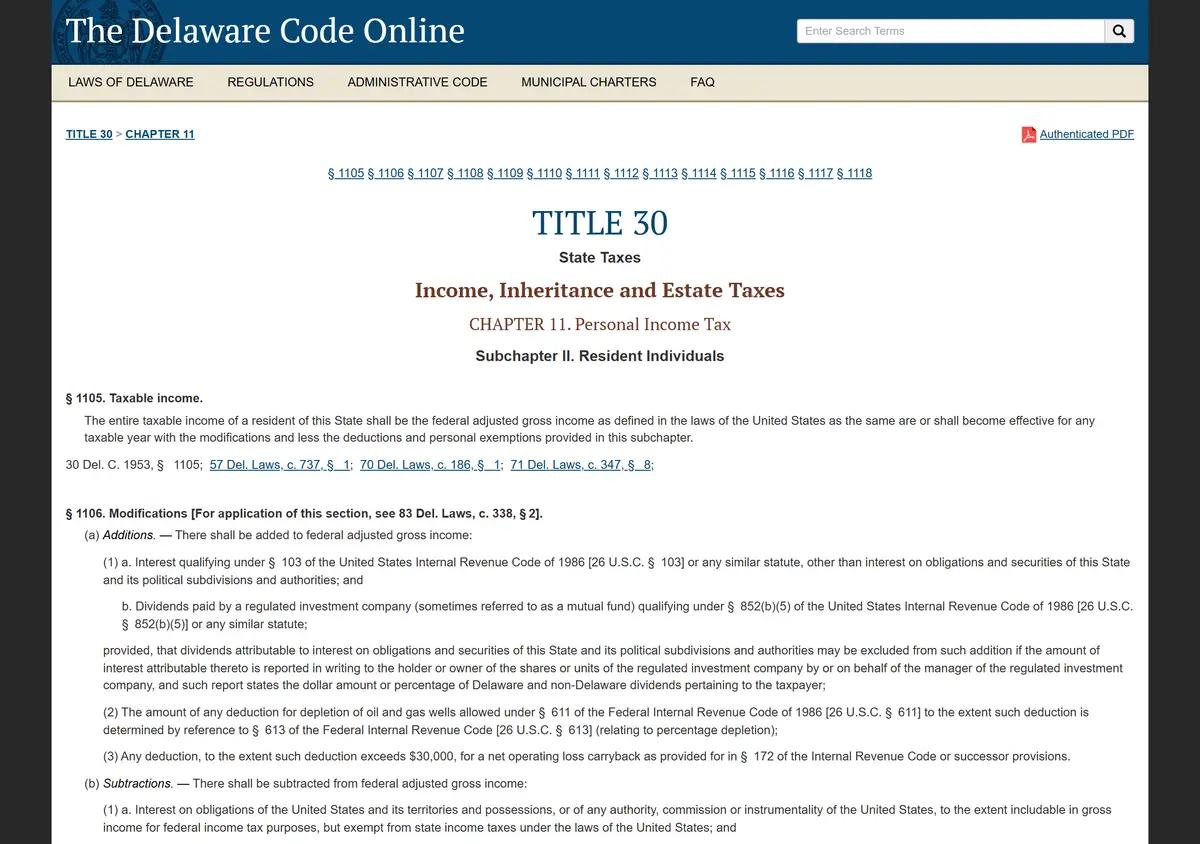
Delaware offers its own Earned Income Tax Credit on top of the federal one, and you pick the version that helps you most. The credit is set in state law at 30 Del. C. section 1117, and it is figured as a percentage of the federal earned income credit you already qualify for.
Here is the choice. One option is a non-refundable credit equal to 20 percent of your federal EITC. It can wipe out more of the Delaware tax you owe, but it cannot drop your bill below zero, so it does not pay out as a refund on its own.
The other option is a refundable credit equal to 4.5 percent of your federal EITC. The percentage is smaller, but any part that is more than the tax you owe comes back to you as a refund, even if you owe no tax at all.
Which one wins depends on your tax bill. A filer with little or no Delaware tax to offset usually comes out ahead with the refundable 4.5 percent version, because it can still put money in your pocket. A filer with more tax owed may get more from the 20 percent version.
The refundable choice is fairly new. For tax years before 2022, Delaware offered only the 20 percent non-refundable credit. The refundable 4.5 percent option was added for tax years beginning on or after January 1, 2022.
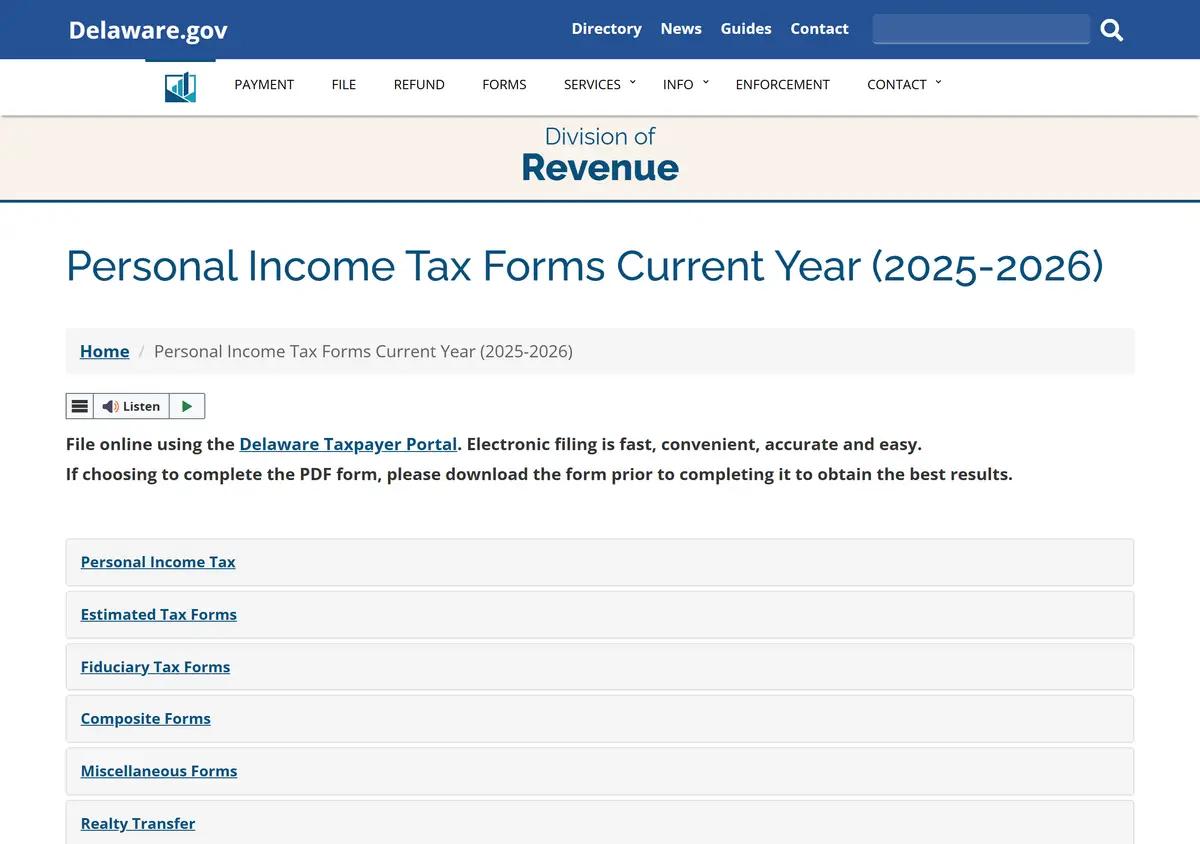
To claim it, you must have qualified for the federal earned income credit and file a Delaware income tax return, using DE Schedule II. A free tax preparer or tax software will usually compare the two versions and take whichever leaves you better off.
Who qualifies
- You must have claimed the federal Earned Income Credit and file a Delaware income tax return; you choose either the refundable 4.5 percent credit or the nonrefundable 20 percent credit, not both
- A free tax preparer or tax software will usually compare the two options and take whichever version leaves you better off
You may qualify. The program makes the final decision.
How to apply
- 1
Claim the federal earned income credit first, since the Delaware credit is a percentage of it.
- 2
File a Delaware income tax return and use DE Schedule II.
- 3
Compare the two versions: 20 percent non-refundable versus 4.5 percent refundable.
- 4
If you owe little or no Delaware tax, look closely at the refundable 4.5 percent option.
- 5
Let a free tax preparer or tax software pick whichever version leaves you better off.
What the application looks like
Common questions
How much is Delaware's EITC?
You choose one of two versions: a non-refundable credit equal to 20 percent of your federal EITC, or a refundable credit equal to 4.5 percent of it.
What is the difference between the two?
The 20 percent credit is non-refundable, so it only offsets tax you owe. The 4.5 percent credit is refundable, so any part above your tax bill comes back as a refund.
Which one should I take?
It depends on your tax bill. A filer with little or no Delaware tax usually gains more from the refundable 4.5 percent version. Tax software or a preparer can compare them for you.
How do I claim it?
You must have qualified for the federal earned income credit, then file a Delaware income tax return using DE Schedule II.
Not sure this is the right program for your situation?
See all Delaware programs →Free · Private · No account needed