
TANF (Cash Assistance for Families)
Last updated August 2026
TANF is monthly cash for families with children who have very little income. Here is the thing that confuses everyone: no state calls it TANF. Alabama calls it Family Assistance. Alaska calls it Temporary Assistance. California calls it CalWORKs. You apply through your state's program under your state's name, never through the federal government.
The official way to find your door is the federal Help for Families directory at acf.gov, which lists every state and territory office. Or just search your state's name plus "cash assistance." You must apply in the state where you live.
Payment amounts and income limits are set by each state, so they vary widely. What is federal: the clock. Federally funded cash is capped at 60 months in a lifetime per family. States can extend it for hardship, but only for a small share of cases. Every month you take cash burns one.
Two doors people miss. Child-only cases: a child can get TANF even when no adult in the home qualifies. A grandparent raising a grandchild can apply for the child without going on aid themselves, and those cases have historically been nearly half the national caseload. Diversion: many states offer a one-time lump payment instead of monthly aid, useful for a car repair that stands between you and a job.
Expect work requirements. Federal law makes states put most adults into work or training activities, and each state sets its own hours, exemptions, and penalties. If a disability or caregiving makes work impossible, say so at the interview. And if you are denied or cut off, every state must give you a fair hearing; ask for one.
Who qualifies
- Families with children (or pregnant)
- Very low income — limits vary by state
You may qualify. The program makes the final decision.
How to apply
- 1
Find your state's program in the federal Help for Families directory at acf.gov, or search your state's name plus "cash assistance."
- 2
Apply through your state's portal or county office. Most states let one application cover cash, food, and health coverage at once.
- 3
Ask the intake worker three things: the payment for your family size, the income limit, and where you stand on the 60-month lifetime clock.
- 4
Raising a relative's child? Ask about a child-only case. The child can qualify even if you do not, and it may not burn the time clock.
- 5
Need one lump sum instead of monthly aid? Ask whether your state offers a diversion payment, and whether it counts against your clock.
- 6
If you are denied or cut off, request a fair hearing. Every state must offer one.
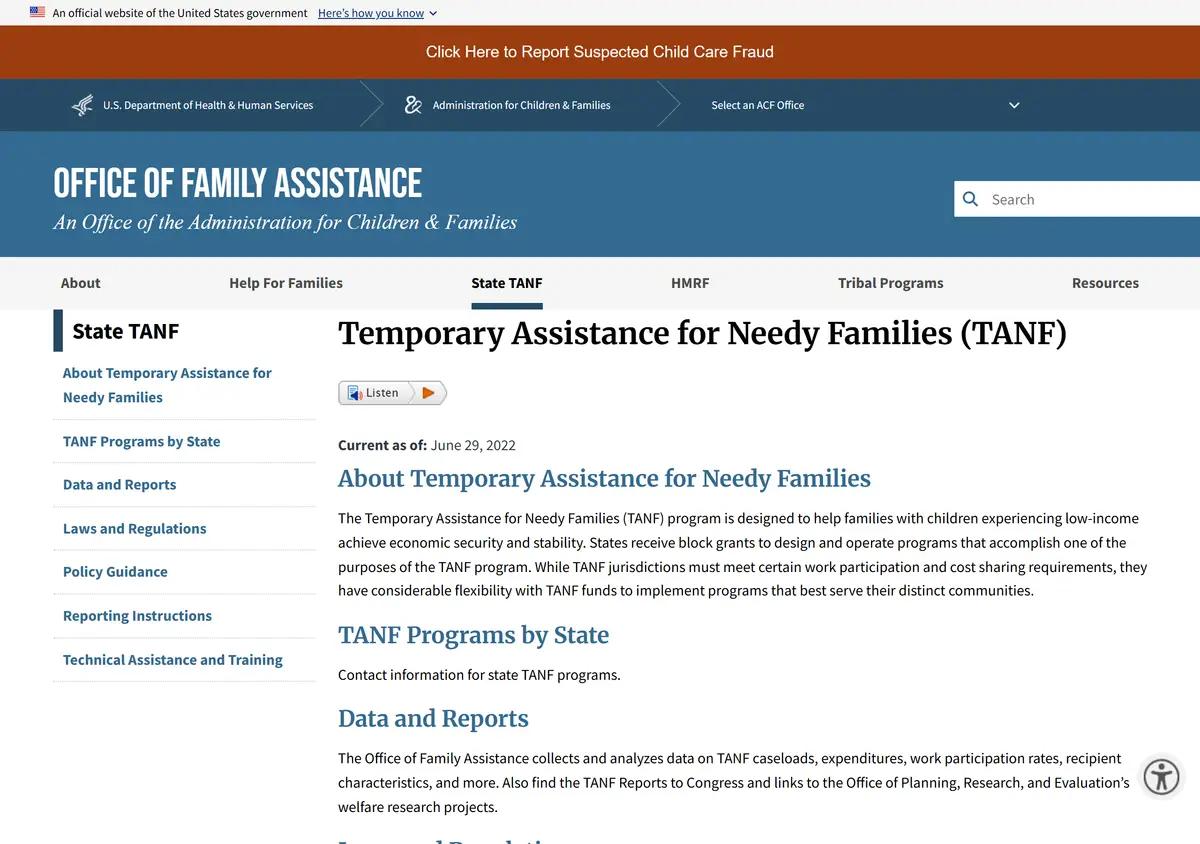
What the application looks like
Common questions
How do I apply for TANF?
Through your state, under your state's own program name. The federal Help for Families directory at acf.gov lists every state office. The federal government never pays TANF cash directly.
How much does TANF pay?
It depends entirely on your state and family size. Each state sets its own amounts from a federal block grant. Your state's office or website has the current figures.
How long can I get TANF?
Federally funded cash is capped at 60 months in a lifetime. States can be stricter, or extend for hardship in limited cases. Child-only cases generally do not burn the clock.
Can my grandchild get TANF if I make too much?
Often yes, through a child-only case. The child's eligibility is what counts, and the relative raising them does not have to be on aid. Ask your state office directly.
Do I have to work to get TANF?
Most adults must do work or training activities, with hours and exemptions set by your state. Disability and caregiving exemptions exist, but you have to ask for them.
What if I'm denied?
Ask for a fair hearing. Federal law requires every state to give people a way to appeal a denial or a cutoff, and the steps must be explained to you.
Not sure this is the right program for your situation?
See all United States (federal programs) programs →Free · Private · No account needed