
Washington TANF / WorkFirst (Cash Assistance)
Last updated August 2026
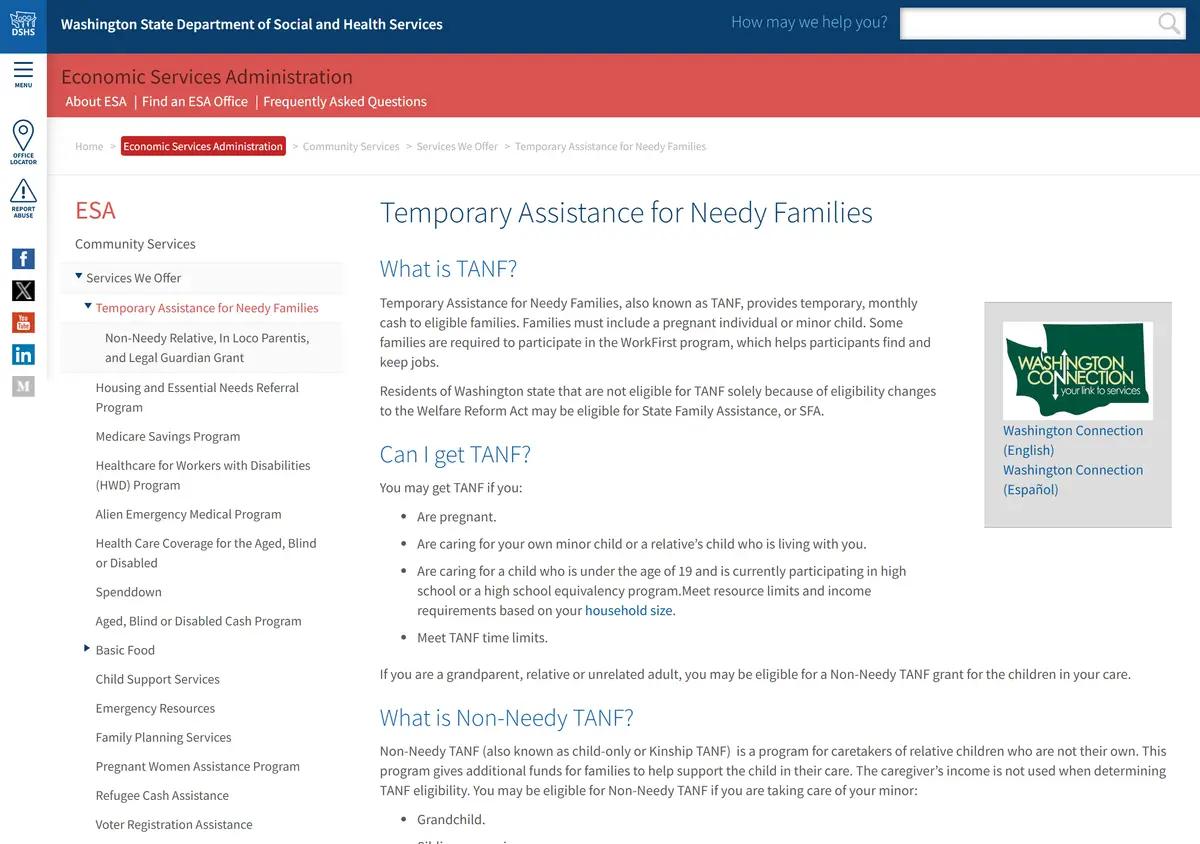
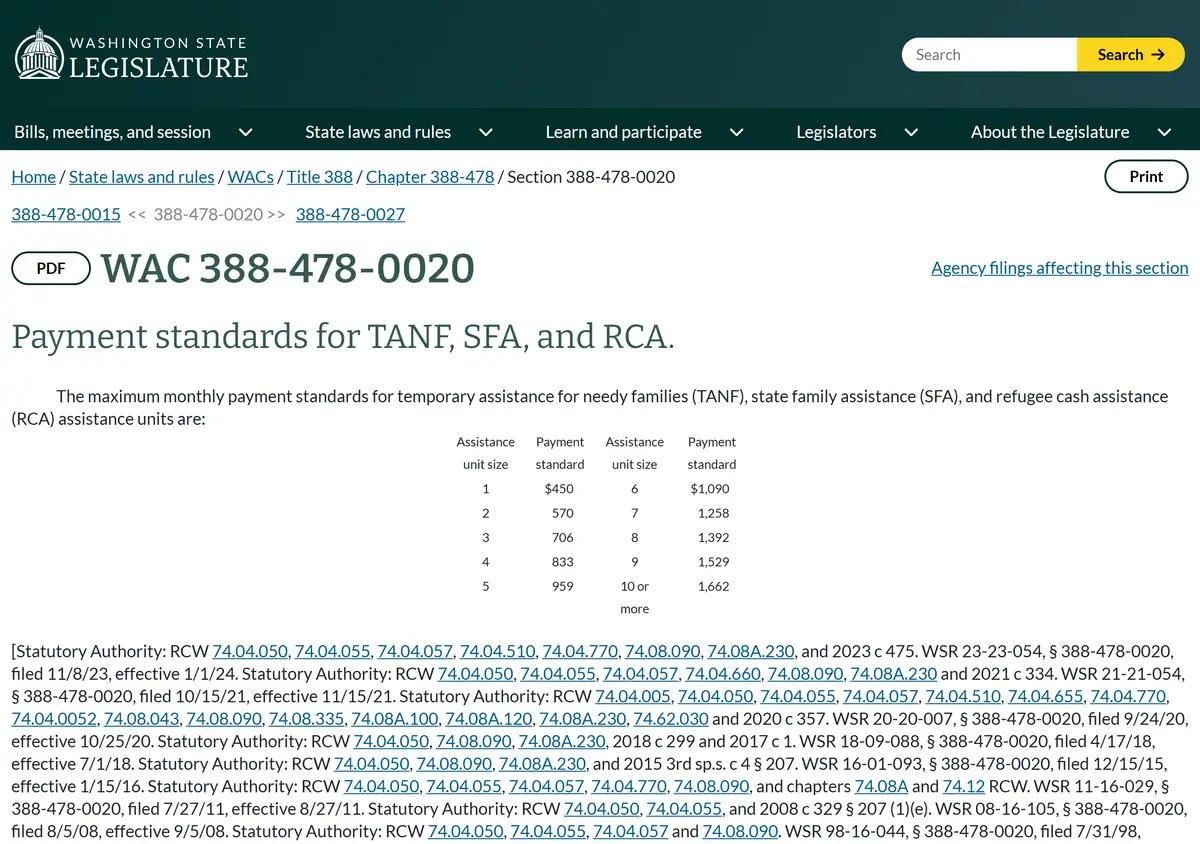
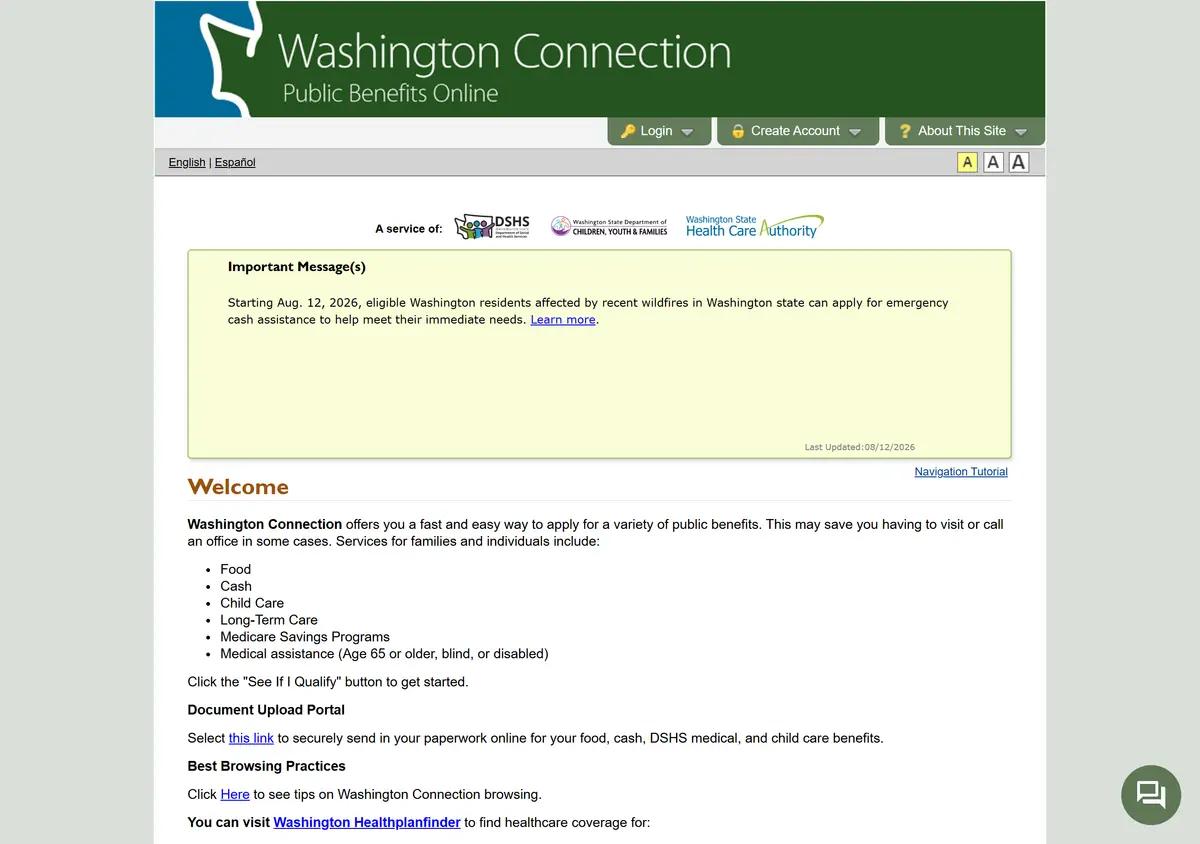
Washington TANF gives monthly cash to families with children, or a pregnant person, alongside the WorkFirst employment program. The payment standards are higher than most people have heard: $450 a month for one person, $570 for two, $706 for three, $833 for four. Apply at washingtonconnection.org, by phone at 877-501-2233, at a Community Services Office, or by mail.
Before enrolling, ask about Diversion Cash Assistance. Families who qualify for TANF but need only one month of help can take a one-time payment of up to $1,250 for rent, utilities, clothing, or transportation instead. One honest caveat: going onto TANF within 12 months can trigger partial repayment, so use it when the problem is truly short.
Grandparents and other relatives raising children should know about the child-only door. Non-needy kinship TANF pays a grant for the child without counting the caregiver's income and without WorkFirst requirements. If you are raising a grandchild, this is built for your household.
The 60-month lifetime limit is real, but softer than it sounds. Extensions exist for people 65 or older, blind or disabled, working 32-plus hours, homeless, in a family-violence plan, with an open child welfare case, and more, including an automatic one for months when state unemployment hits 7 percent. Months when you get no grant for yourself do not count.
The obligations: most adults join WorkFirst, starting with an orientation and building through job search, training, or barrier-removal work. Parents open a child support case unless DSHS grants good cause for safety. When child support is collected, families get a pass-through on top of the grant: up to $50 a month with one child, $100 with two or more.
Stack the extras. Emergency rent or utility help exists through AREN. Families with a child under 3 on the grant get the Diaper Related Payment. WorkFirst participants can get vouchers for gas, school costs, and clothing. And the same application checks Basic Food and health coverage.
Who qualifies
- Families with children who are Washington residents and meet an income and resource test
- Most adults must take part in the WorkFirst program, and federal and state time limits apply to how long you can receive cash
You may qualify. The program makes the final decision.
How to apply
- 1
Apply at washingtonconnection.org, call 877-501-2233, or visit a Community Services Office.
- 2
Ask about Diversion Cash Assistance first if your crisis might be one-time.
- 3
Complete the interview, then meet your WorkFirst worker to set the plan.
- 4
Open the child support case, and ask about good cause if cooperation would be unsafe.
What to have ready
- ID and Social Security numbers for the adults applying
- Proof of income and resources
- Proof that a child lives with you, or of pregnancy. The office confirms the full list.
What the application looks like
Common questions
How much does Washington TANF pay?
Maximum monthly standards are $450 for one person, $570 for two, $706 for three, $833 for four, rising with household size. Income reduces the grant from those maximums.
What is Diversion Cash Assistance?
A one-time payment up to $1,250 for rent, utilities, clothing, or transportation for families who qualify for TANF but need only a month of help. Taking TANF within 12 months can trigger partial repayment.
Can grandparents get TANF for a grandchild?
Yes. Non-needy kinship or child-only TANF pays for the child without counting the caregiver's income and without WorkFirst requirements.
What happens after 60 months?
The lifetime limit has eight extension categories, including disability, homelessness, family violence, working 32-plus hours, and months when state unemployment is 7 percent or higher.
Do I have to cooperate with child support?
Generally yes, unless DSHS grants good cause because cooperation would cause harm. Collected support brings a pass-through of up to $50 to $100 a month on top of the grant.
Not sure this is the right program for your situation?
See all Washington programs →Free · Private · No account needed