
Work First Family Assistance (North Carolina TANF)
Last updated August 2026
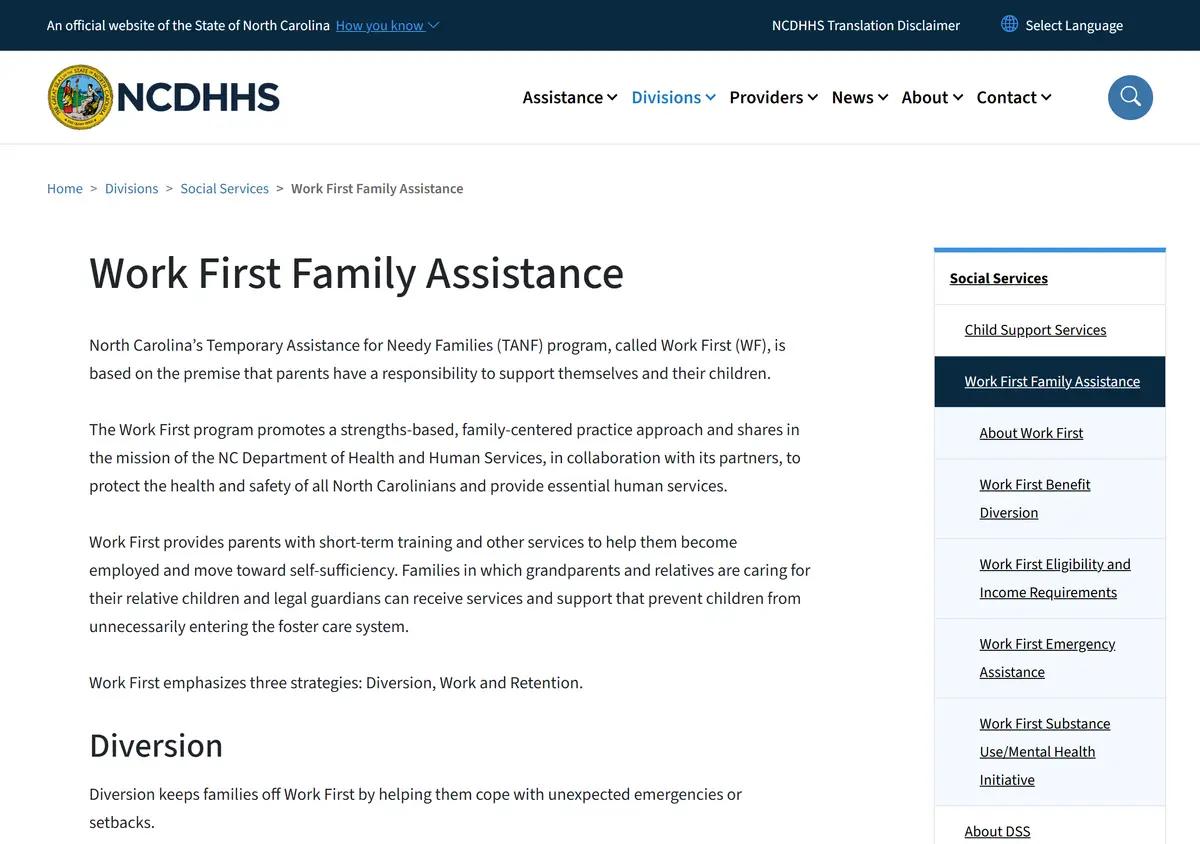
Work First is North Carolina's version of TANF. It gives short-term cash assistance to low-income families with children, and it pairs that cash with services meant to get a parent working. The money is provided primarily for the children in the home. Apply online at epass.nc.gov or in person at your county Department of Social Services.
Know the clock before you start, because North Carolina's is short. Once your family enters the work part of the program, cash assistance is limited to 24 months. After that, most families cannot get Work First cash again for three years. A separate federal rule caps lifetime help at 60 months. Treat the check as a bridge, not a floor.
The program is built around a plan, not just a check. You sign a Mutual Responsibility Agreement that lays out your steps, and counties back it up with services like transportation, child care, and short-term training for families at or below 200 percent of the federal poverty level. Relative caregivers and grandparents raising kids to keep them out of foster care can get services too.
Ask about diversion before you commit the clock. Work First can sometimes solve a short-term emergency with one-time help instead of monthly assistance, which keeps your 24 months in reserve. Your county worker can tell you if your situation fits.
Apply once and let the state check everything. The same ePASS account screens you for Food and Nutrition Services and Medicaid, so a parent applying for cash can walk away with food and health coverage from the same session. That matters, because SNAP and Medicaid reach far higher incomes than cash assistance does.
If the tight limits rule you out, the family still has doors. Food and Nutrition Services feeds the household on friendlier income rules. Medicaid covers the children and often the parents. And 2-1-1 tracks the local funds and charities that fill the gaps Work First's narrow rules leave behind.
Who qualifies
- Families with children who are North Carolina residents and meet an income test; counties provide work services to families at or below 200 percent of the federal poverty level
- You take part in work activities under a plan; families leaving Work First for a job may get a bonus payment for up to three months
You may qualify. The program makes the final decision.
How to apply
- 1
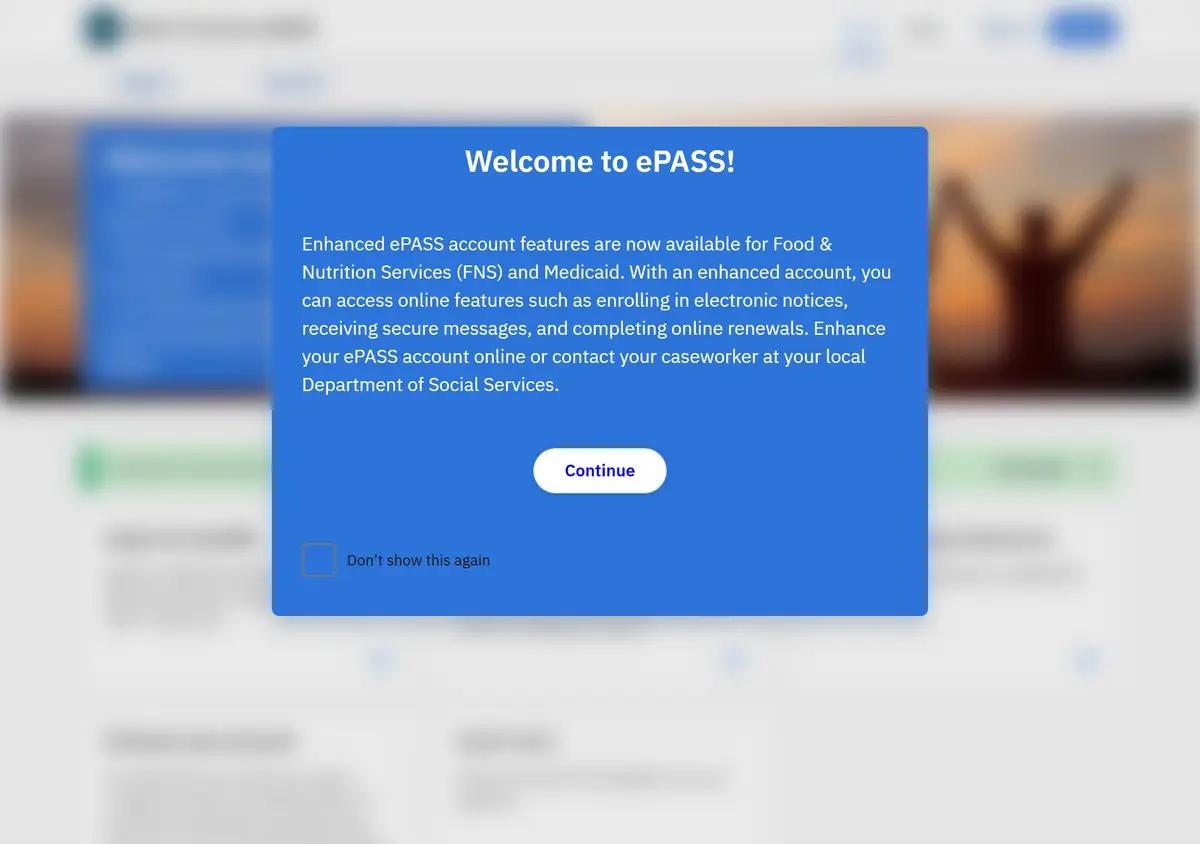
Apply online at epass.nc.gov or at your county Department of Social Services.
- 2
Ask the county worker about diversion help before starting monthly assistance.
- 3
Sign your Mutual Responsibility Agreement and set up your work plan.
- 4
Provide proof of income, household members, and North Carolina residence.
- 5
Take part in the work activities so payments continue.
What to have ready
- ID and Social Security numbers for the adults applying
- Proof of income for the household
- Proof that a child lives with you. The county office confirms the full list.
What the application looks like
Common questions
Who can get Work First cash assistance in North Carolina?
Low-income families with children who are North Carolina residents and meet the income test. Counties provide work services to families at or below 200 percent of the federal poverty level.
How long can I get Work First?
Cash assistance is limited to 24 months once your family enters the work components, followed by a three-year wait for most families. A federal 60-month lifetime cap also applies.
Do I have to work to get Work First?
You sign a Mutual Responsibility Agreement and take part in work activities under a plan set with your county. The cash is short-term and tied to steps toward a job.
What is diversion?
One-time help for a short-term emergency instead of monthly assistance. It can solve the immediate problem without starting your 24-month clock. Ask your county worker if you qualify.
My income is too high for Work First. What else can help?
Food and Nutrition Services has far higher income limits and the same ePASS application covers it. Medicaid handles the children's coverage, and 2-1-1 finds local emergency cash and bill help.
Not sure this is the right program for your situation?
See all North Carolina programs →Free · Private · No account needed